.png)


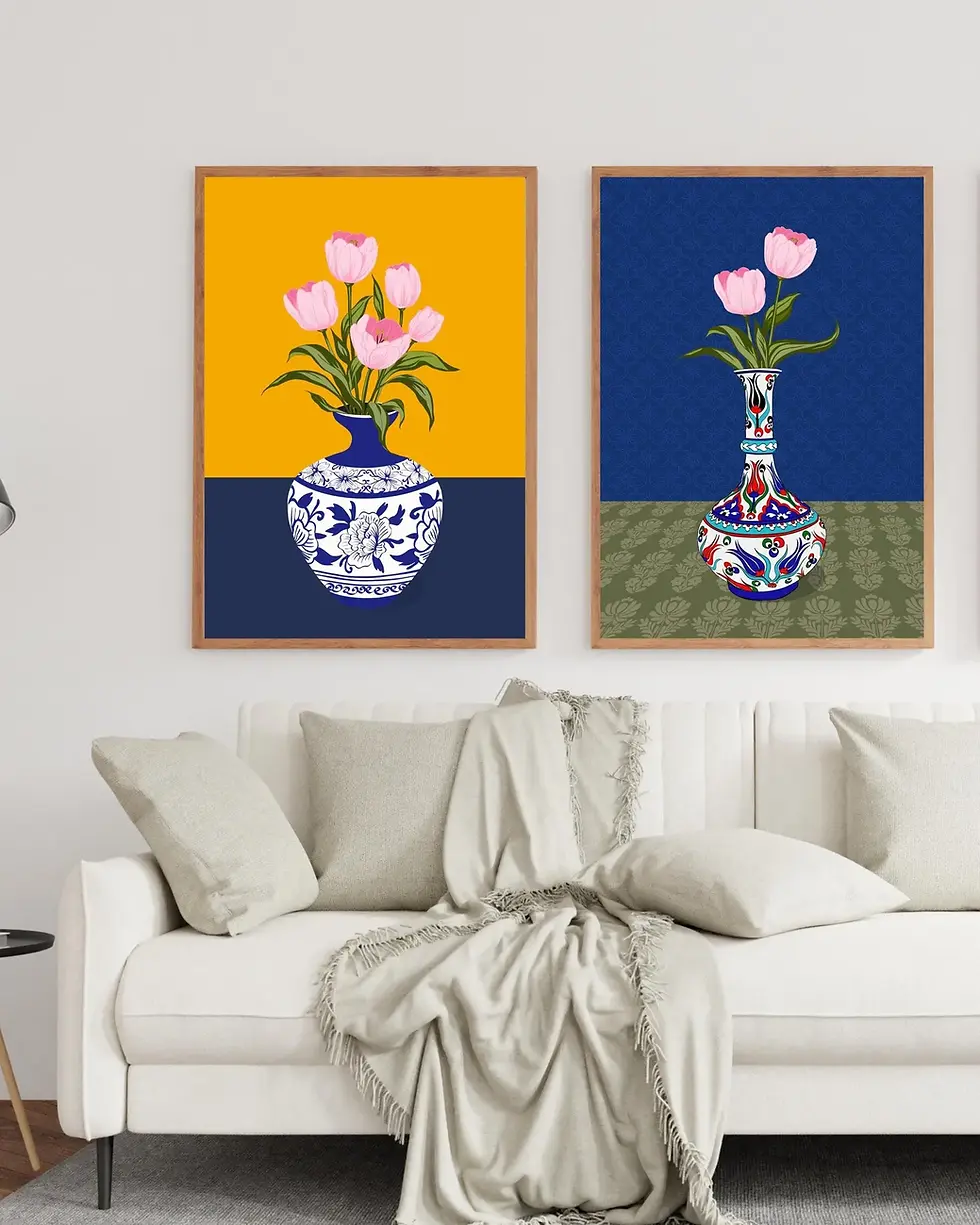
Looking at an Iznik vase means looking at more than a vase. You are looking at the visual language of Ottoman tile art, woven from colour, flowers and patience. Tulips, carnations, pomegranates and hyacinths are vivid motifs that repeat for centuries across tiles, textiles and ceramics. When I begin a drawing, I think about the rhythm of this tradition: I build the vase, balance the direction of each flower one by one, and layer the colours the way they appear on a glazed tile surface. Every piece is drawn by hand. My aim is not to copy a historical motif, but to carry the feeling of Ottoman tile art into modern wall art.
Long before the tulip became a symbol of the Netherlands, it was treasured in the Ottoman world. Tulips, carnations, roses and pomegranates bloom across Turkish textiles, tiles and ceramics. In my hand-drawn vase illustrations, I keep coming back to these flowers.
What makes Iznik vases special?In Iznik ceramics, a white ground, cobalt blue, turquoise, green and a strong red work together. The flowers are never just decoration: they set the rhythm of the composition, give the vase movement and guide the eye from one motif to the next. The next time you see Iznik tiles in a museum or a historic building, start with the colour balance, then follow the direction of the tulips, carnations and leaves.
Reading the motifs: tulip, carnation and pomegranate
Tulip: the favourite of the Ottoman court; the early 18th century is remembered as the "Tulip Era."
Carnation: one of the most frequent motifs in Iznik and textile patterns.
Pomegranate: a symbol of abundance and plenty.
Rose and hyacinth: essential parts of the classical floral repertoire.
Bring an Iznik touch into your homeThese drawings don't copy historical motifs; they start from the ideas of colour and balance behind them. That way, the classic Iznik spirit can find a place in a contemporary home without feeling heavy. The posters below will help you see the individual character of each flower on this small art journey.

The blue-and-white peony poster carries Iznik's cool tones into a bolder wall statement. It's a great place to start if you want a strong focal point beside a bookshelf, on a dark wall or above a patterned kilim.

The pomegranate motif is associated with abundance and plenty. A pomegranate poster in the kitchen, dining area or a small coffee corner can make an everyday space feel more personal and warm.

The steady rhythm of the carnation creates a calmer, more balanced look. The Ottoman vase carnation poster is an elegant middle ground for anyone who loves classical motifs but wants a modern framing language at home.
The tulip is one of the most recognisable motifs in this visual language. Combine options like the Pink Tulip, the Tulip Vase and the two-piece set to build a single gallery wall, or browse the full hand-drawn Iznik flowers collection to see more colours.
Decorating ideas with Iznik flowers
These prints pair well with coloured surfaces: on a deep blue, terracotta or sage green wall they look more dramatic, while on a white wall they feel airier. You can create a gentle layered look with a patterned kilim, a ceramic vase or linen-textured textiles. In a calmer interior, a single poster in a thin wooden or gold frame brings just enough warmth.
May the colours and rhythm of Iznik flowers inspire you to create your own little art corner at home. With love from Istanbul, Onur


